How to Choose the Right Embroidery Machine for Your Factory

Table of Contents

Introduction
Setting up or scaling a garment or textile factory comes with dozens of equipment decisions, but few matter as much as choosing the right embroidery machine. The machine you invest in today will directly shape your production capacity, order turnaround time, and the quality of finish your buyers expect. Many factory owners rush this decision based on price alone, only to realize later that the machine cannot handle their order volume or design complexity. If you’re comparing brands and specifications, our detailed guide to embroidery equipment is a good starting point before you speak with a supplier. This blog walks you through the practical factors factory owners and production managers should evaluate before making a purchase, so you can make an informed, long-term decision rather than a reactive one.
Embroidery Machine

Understanding Your Factory's Embroidery Needs

Before comparing models or brands, it helps to sit down and honestly map out what your factory actually needs. Start with your production volume. A boutique unit fulfilling small custom orders has very different requirements than a large-scale export factory running multiple shifts. If your order books are growing month on month, it makes sense to plan for a machine that can scale rather than one that meets only today’s demand.

Next, think about what you are producing. Apparel, cap and headwear, patches, and home textile embroidery all place different demands on stitching area, frame type, and needle configuration. Fabric type matters too stretch fabrics, denim, leather, and delicate synthetics all behave differently under the needle. Finally, consider whether you primarily produce in-house or also take on contract and job-work orders, since job-work factories often need more flexible, quick-changeover setups.

Types of Embroidery Machines for Factories

Once your requirements are clear, the next step is understanding the categories available so you can narrow down what fits your operation.

Single-Head vs. Multi-Head Machines

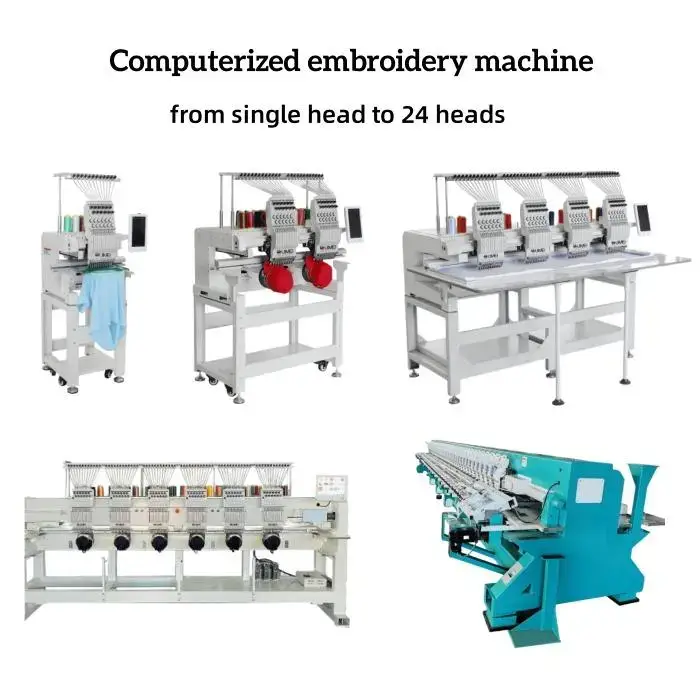
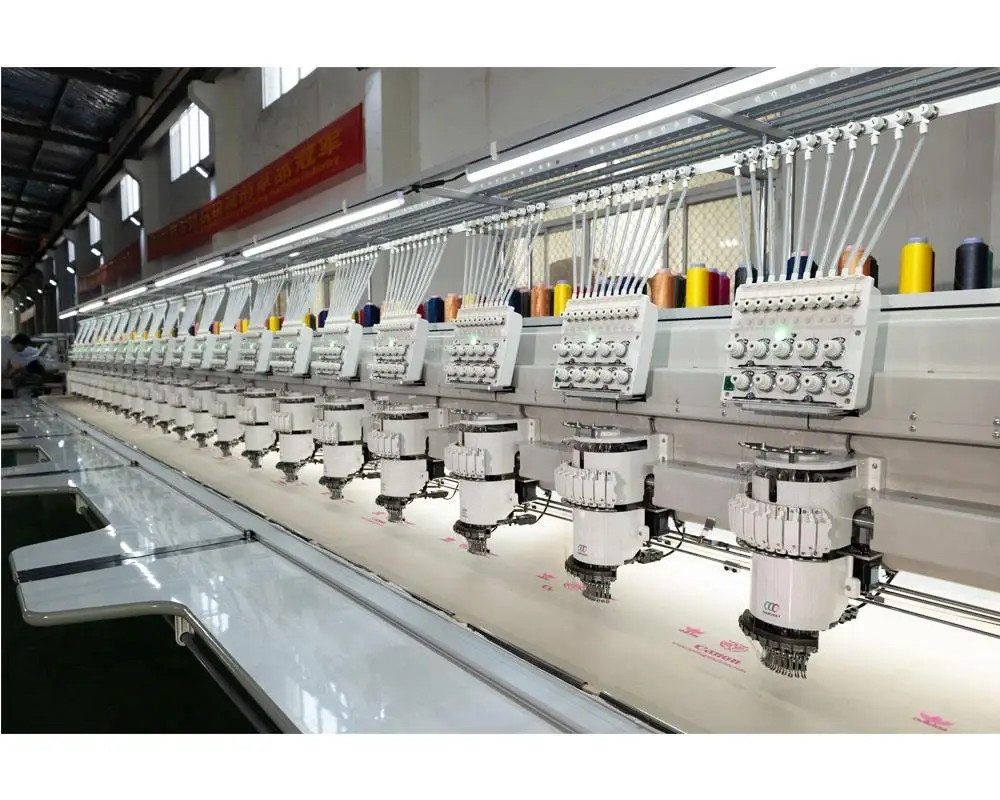
Single-head machines are typically used by smaller units or workshops handling sample development and low-volume custom orders. They offer flexibility and lower upfront investment but limited output. Multi-head machines, on the other hand, are built for factories running bulk production, since multiple heads can stitch identical designs simultaneously across garments. For most mid-to-large factories, a multi-head embroidery machine is the more practical long-term investment because it directly impacts daily output and delivery timelines.

Flat-Bed, Cap, and Specialty Machines

Flat-bed machines are the industry standard for general apparel work, while cap-frame or tubular machines are purpose-built for curved surfaces like caps and headwear. Some factories also invest in chenille or specialty attachments for textured, premium finishes. Choosing between these depends entirely on your product mix a factory producing mostly caps has very different frame requirements than one focused on flat garments.
Types of Embroidery Machines

Key Technical Specifications to Evaluate

Beyond the broad category, the technical specifications of an embroidery machine determine day-to-day efficiency on the factory floor.

Needles, Heads, and Embroidery Field Size

The number of needles determines how many thread colors can be used without manual changes, which affects design complexity and production speed. Similarly, the hooping area should match the largest design size you regularly produce, since an undersized field limits what your factory can accept in orders.

Speed, Auto-Trimming, and Software Compatibility

Stitching speed, usually measured in stitches per minute, has a direct impact on daily throughput, especially for a professional embroidery machine running long shifts. Features like automatic thread trimming and thread-break detection reduce operator intervention and downtime, which adds up significantly over a full production day. It’s also worth checking software compatibility, since your design files need to translate smoothly to the machine without formatting issues or manual rework.

Brand, Support, and Warranty Considerations

The brand behind your machine matters almost as much as the equipment itself. Established manufacturers generally offer more reliable after-sales support, easier availability of spare parts, and better documentation, which reduces long-term downtime risk. Newer or lesser-known brands may offer attractive pricing, but factory owners should weigh this against the real cost of delayed repairs if something goes wrong mid-production. Before finalizing a supplier, it’s worth speaking to other factory owners or checking reviews to understand how a brand performs under real production conditions, not just in a showroom demo. Warranty terms and the responsiveness of local service technicians should be treated as non-negotiable, since even the best automatic embroidery machine is only as good as the support behind it.

Budget Planning: Cost vs. Long-Term Value

It’s natural to start budget conversations with the upfront cost, but a smarter approach looks at total cost of ownership maintenance, consumables, training, electricity, and downtime during repairs. Some suppliers also offer financing or leasing, which can make a higher-capacity machine accessible without straining working capital. A useful way to frame this is through return on investment, how much extra output does the higher-cost machine unlock compared to a cheaper alternative, and how quickly does that offset the price difference? Factories that focus only on the sticker price often end up spending more later on repairs, lost production days, or premature replacement.

Automation, Space & Infrastructure Requirements

Modern factories increasingly lean toward automation, but it’s worth evaluating how much of it your operation genuinely needs versus what simply adds cost.

Automation and Technology Features

Features like automatic color change, auto thread trimming, and remote monitoring through connected software can meaningfully reduce manual labor and human error, particularly for factories running large multi-head setups. If your factory already uses production management software, checking whether the new equipment can integrate with it is worth the extra diligence, since real-time monitoring often catches inefficiencies that would otherwise go unnoticed for weeks.

Space, Power, and Layout Requirements

Larger multi-head machines require significant floor space and careful layout planning for smooth material flow between cutting, embroidery, and finishing stations. Power supply is another practical consideration high-speed machines need stable, dedicated electrical lines, and factories with inconsistent power should factor in backup arrangements to avoid production loss.

Operator Training and Common Buying Mistakes

Even the best machine underperforms with an undertrained operator, and rushed purchases are a common cause of factory-floor regret. Newer computerized machines often have a learning curve, so it’s worth checking whether your supplier offers structured training, either on-site or through documentation. An intuitive interface reduces the time it takes for new operators to become productive, which matters especially for factories dealing with staff turnover. On the buying side, one common mistake is overbuying capacity that isn’t currently needed, tying up capital in a machine running well below its potential. Another is ignoring after-sales service availability in favor of a lower quoted price, only to face long repair delays later. Prioritizing price over long-term reliability tends to cost more than the initial savings suggest.

Checklist: Questions to Ask Before You Buy

Before signing off on any purchase, it helps to run through a short checklist with your team and supplier:
  • What is our realistic monthly production volume, and does this machine comfortably support it?
  • Does the embroidery field size match our largest recurring design requirements?
  • What is the average response time for repairs and spare parts in our region?
  • Does the machine integrate with our existing design software and production workflow?
  • What does the total cost of ownership look like over three to five years, not just the upfront price?
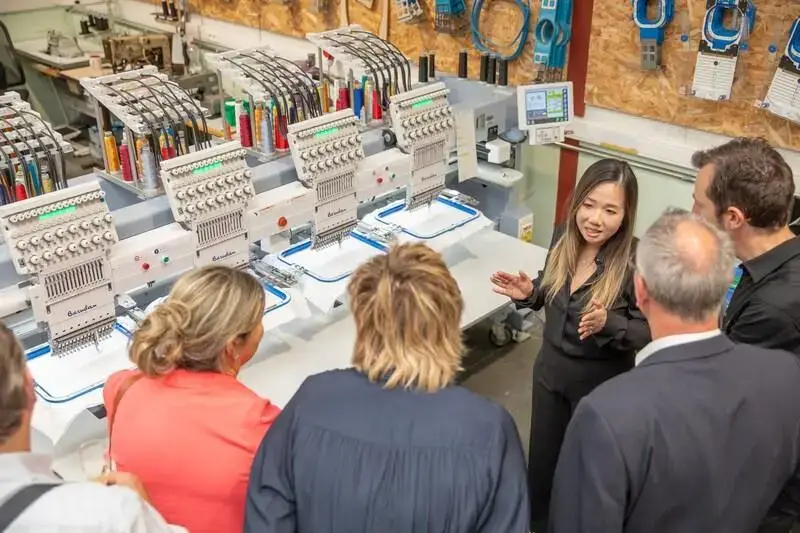
Working through questions like these with your supplier and comparing a higher-spec professional setup against a more basic model often reveals gaps that aren’t obvious from a spec sheet alone. It’s also worth reviewing the best embroidery machine for business use cases similar to your own before finalizing anything.
Questions Before Buying

Conclusion

Choosing the right embroidery machine for your factory isn’t a decision to make on price alone. It requires a clear understanding of your production volume, product mix, technical requirements, and the long-term support a brand can offer. Whether you’re evaluating a basic setup or the best computerized embroidery machine on the market, the goal should be matching the machine to your actual operational needs rather than chasing the most advanced features available. If you’re still weighing your options, the team at Hongstar can help you compare models based on your factory’s real production needs and connect you with the right embroidery machine for your business.
Scroll to Top